From CNN's Becky Anderson, Abeer Salman, Asmaa Khalil, Zeena Saifi and Kevin Liptak
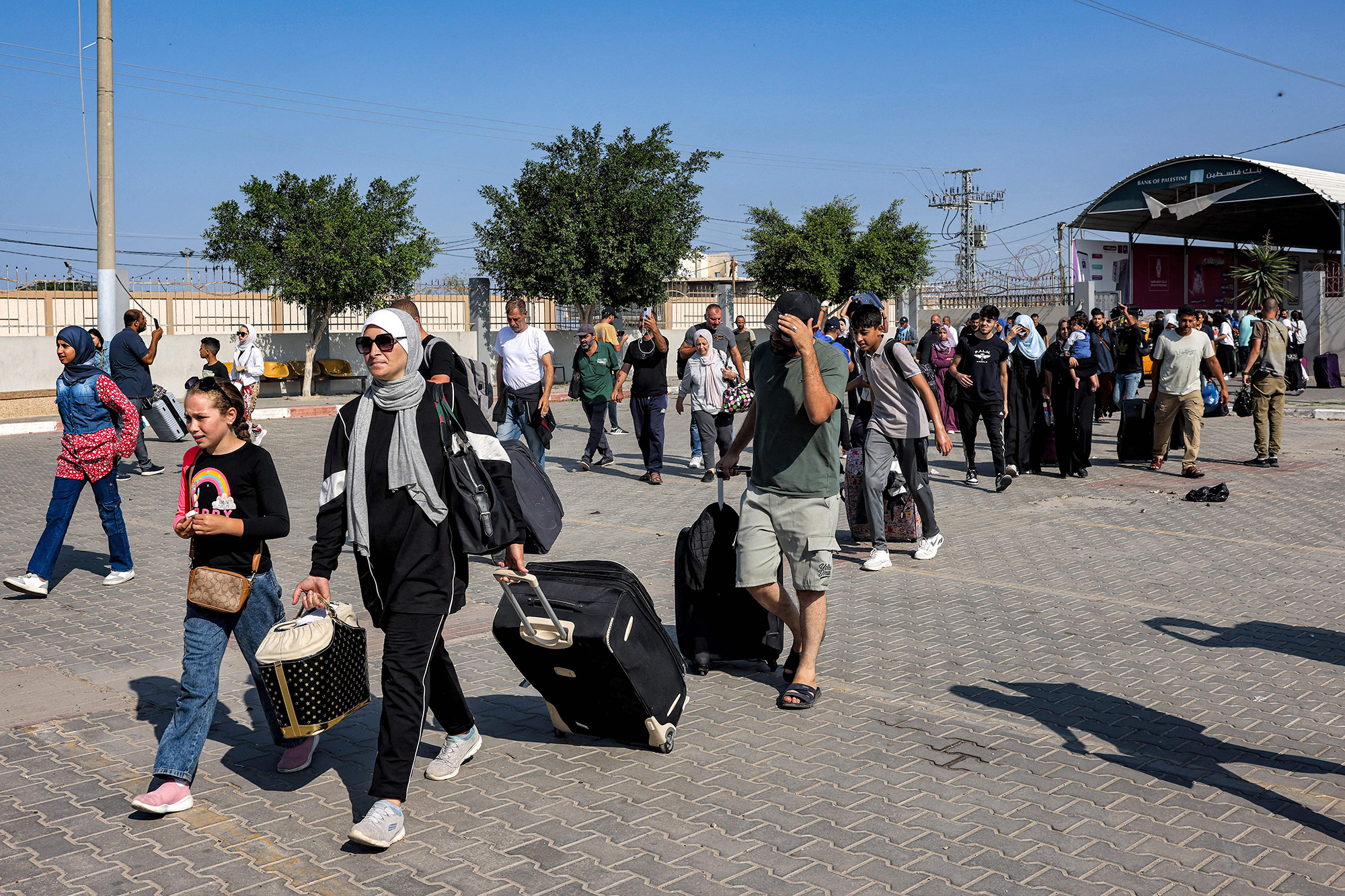
Up to 500 foreign nationals could be released from Gaza, according to sources familiar with the negotiations.
CNN has spoken to three different sources close to the matter who say that around 500 foreigners are expected to leave Gaza at the Rafah crossing with Egypt.
A Palestinian border official, Hisham Adwan, told CNN that 500 people were waiting to cross, revising this figure up from an initial 450.
One source close to the negotiations also said 500 foreign nationals could leave Gaza, and another source, at the border, said they were aware of 478 people who would be permitted to cross.
No timeline has been set on when they will begin moving.
Sources told CNN that Qatar had brokered a deal between Israel, Hamas and Egypt, in coordination with the United States to release foreign nationals and critically injured civilians in Gaza.
This agreement is separate from any hostage negotiations, the source added.
CNN previously reported that 81 injured Palestinians will also arrive at the Rafah crossing Wednesday morning, as well as the hundreds of foreign nationals.
Rafah crossing "likely to open today" for first group of foreigners, UK foreign secretary says
From CNN’s Alex Hardie in London
The Rafah border crossing between Gaza and Egypt is "likely to open today for a first group of foreign nationals,” British Foreign Secretary James Cleverly said Wednesday in a social media post.
“UK teams are ready to assist British nationals as soon as they are able to leave,” he said on X, formerly Twitter.
On Tuesday, US Secretary of State Antony Blinken said approximately 400 Americans and their family members — about 1,000 people total — are stuck in Gaza and seeking to leave amid diplomatic efforts to help them.
Blinken spoke with his Qatari counterpart Monday about pressing Hamas to allow Americans and other foreign nationals to leave, according to a State Department spokesperson.
Border traffic: UK foreign minister Cleverley's remarks Wednesday came as a fleet of ambulances arrived at the Rafah crossing with Gaza to bring about 80 injured Palestinians to Egypt. The patients would be the first known Palestinians allowed out of the enclave since the war with Israel began more than three weeks ago.
Meanwhile, as aid trickles into the coastal strip, Cleverly said, “It’s vital that lifesaving humanitarian aid can enter Gaza as quickly as possible.”
IDF says more than 11,000 "terrorist" targets struck in Gaza during the war
From CNN’s Amir Tal and Martin Goillandeau
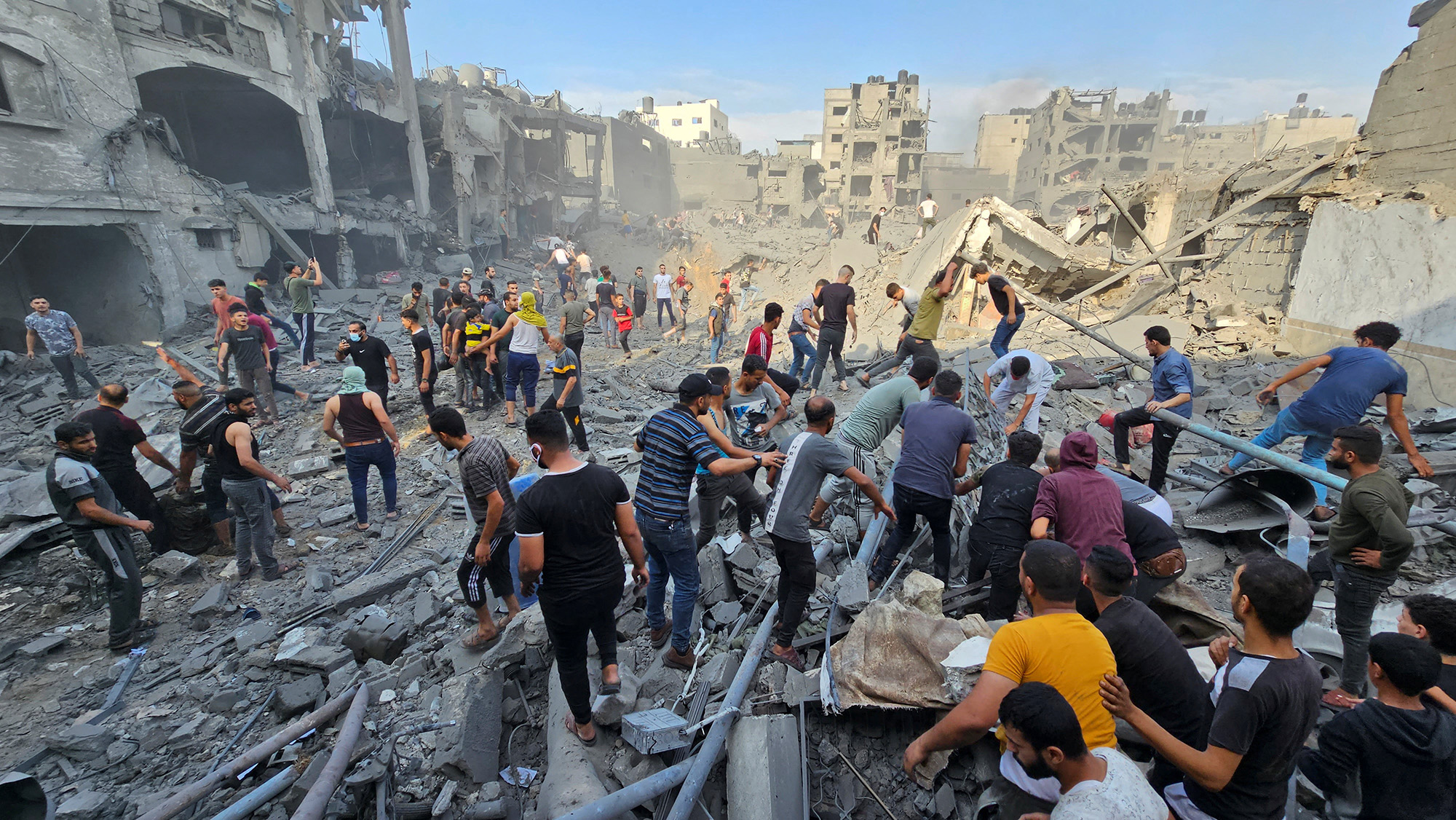
The Israel Defense Forces (IDF) on Wednesday said it has “struck over 11,000 targets belonging to terrorist organizations in the Gaza Strip” since the war began on October 7.
That’s an average of more than 440 strikes per day for the first 25 days of the war.
The IDF has repeatedly said it is not targeting civilians in its unrelenting bombardment of Gaza in response to Hamas' October 7 attack on Israel that killed 1,400 people.
An Israeli strike targeting a Hamas commander in the densely populated Jabalya refugee camp in northern Gaza Tuesday killed a large number of people and left catastrophic damage, according to eyewitnesses and medics in the enclave.
In its statement Wednesday, the IDF said combined troops “struck several terror targets throughout the Gaza Strip” overnight on Tuesday, including operational command centers and Hamas cells.
Israeli troops directed airstrikes on “several Hamas terrorists” who had barricaded themselves in a multi-story building located near a school, medical center, and government offices in the Jabalya area, the IDF statement said.
According to an earlier IDF statement, the airstrike Tuesday targeted and killed Ibrahim Biari, whom it described as one of the Hamas commanders responsible for the October 7 attack.
The IDF also said “numerous other Hamas terrorists” were hit in the strike, and claimed the Central Jabalya Battalion had taken control of civilian buildings.
Hamas however has strongly denied the presence of one of its leaders in the refugee camp. Hazem Qassem, a spokesman for the militant group, accused Israel of attempting to justify what he described as a “heinous crime against safe civilians, children, and women in Jabalya camp.”
More than 8,400 people have died in Gaza during the ongoing war, according to the Palestinian Ministry of Health in Ramallah, which draws on information from the Hamas-controlled enclave.
Battle footage: In its Wednesday statement, the IDF said soldiers also directed aircraft to strike a vehicle “carrying anti-tank missiles driving toward the forces operating in the Gaza Strip.”
Video shared by the IDF showed strikes on multiple locations, and soldiers on the ground in Gaza moving through rubble. The IDF also shared video showing a targeted vehicle turning onto a road before being hit by an explosive, setting it ablaze.
Fleet of ambulances arrives at Rafah crossing to bring injured Palestinians to Egypt
From journalist Asmaa Khalil in Rafah, Egypt and CNN’s Zeena Saifi in Jerusalem
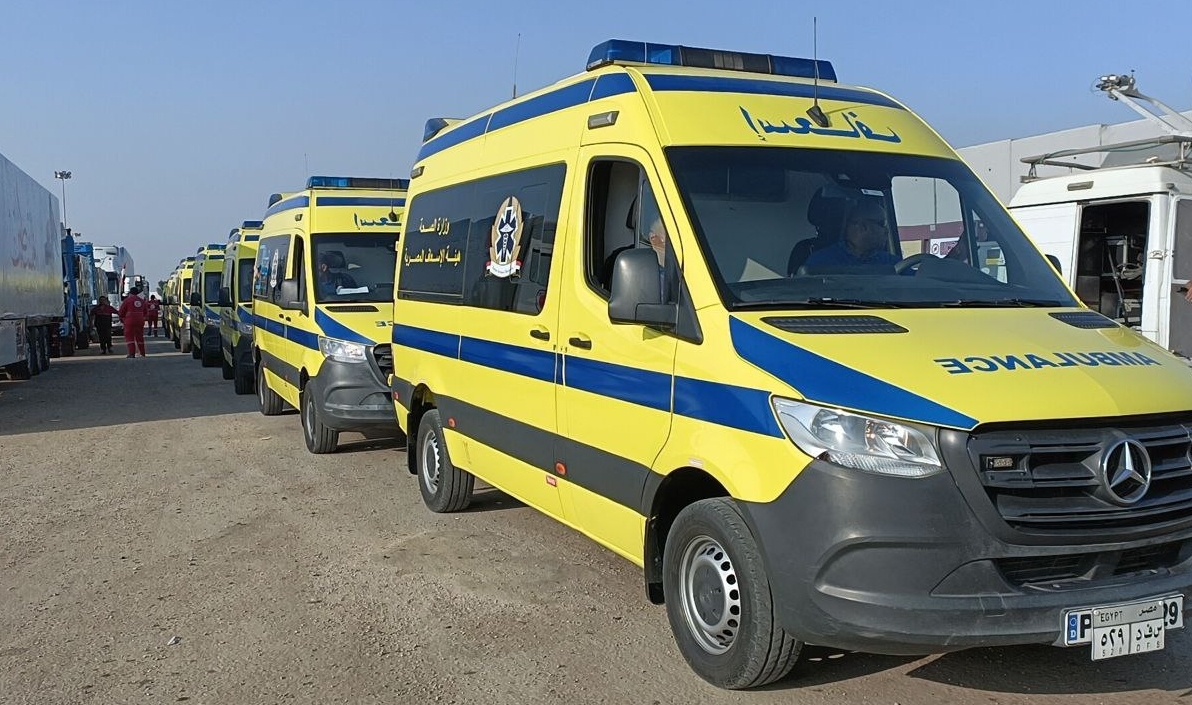
Some 80 ambulances from Egypt arrived at the Rafah border with Gaza on Wednesday morning to receive injured Palestinian patients, an Egyptian border official told CNN at the crossing.
The patients will be the first known Palestinians allowed out of Gaza since the war began more than three weeks ago, if they cross into Egypt.
Earlier, an Egyptian border official told CNN the crossing was set to open to allow 81 wounded Palestinians from Gaza to receive treatment in Egyptian hospitals.
Gaza's Al Shifa hospital director Dr. Mohammed Abu Silmiyeh told CNN most of the patients require surgical intervention in operating rooms, a procedure not currently available in the enclave.
9 Israeli soldiers killed in Gaza, IDF says
From CNN’s Richard Allen Greene and Amir Tal
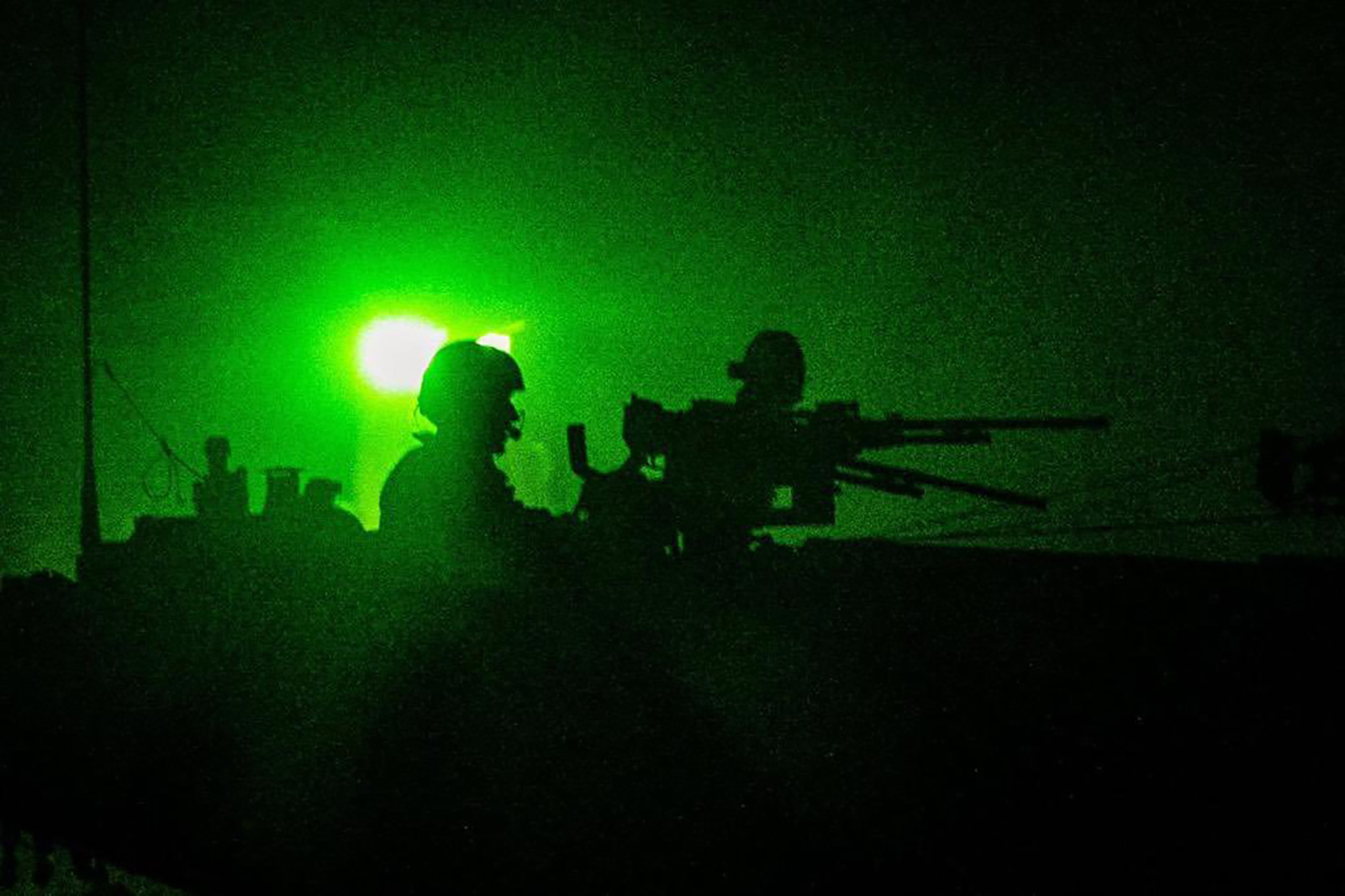
The Israel Defense Forces (IDF) on Wednesday named nine more Israeli soldiers killed during its ongoing ground operation in northern Gaza.
Seven of the troops were members of the Givati brigade, which is focused on fighting terrorism, and the other two were part of the armored corps, the IDF said. It did not say how they were killed.
The IDF identified those killed as Ariel Reich, Asif Luger, Adi Danan, Halel Solomon, Erez Mishlovsky, Adi Leon, Ido Ovadia, Lior Siminovich, and Roei Dawi.
It comes after the IDF on Tuesday confirmed the first two deaths of Israeli soldiers in Gaza since its ground incursion ramped up on Friday.
Saudi Arabia condemns Israel's "inhumane targeting" of Gaza refugee camp
From CNN’s Manveena Suri
Saudi Arabia on Wednesday condemned Israeli forces' "inhumane targeting" of the Jabalya refugee camp in northern Gaza, saying it "totally rejects the repeated targeting by the Israeli occupation forces of densely populated civilian areas."
The Israeli strike targeting a Hamas commander in the densely populated camp Tuesday killed a large number of people and left catastrophic damage, according to eyewitnesses and medics in the enclave.
“The Kingdom of Saudi Arabia condemns in the strongest terms possible the inhumane targeting by the Israeli occupation forces of the Jabalia refugee camp in the besieged Gaza Strip, which caused the death and injury of a large number of innocent civilians,” Saudi's Foreign Ministry said in a statement on X, formerly Twitter.
"The Kingdom condemns and totally rejects the repeated targeting by the Israeli occupation forces of densely populated civilian areas, and its continuing violation of international law and international humanitarian law."
The “dire humanitarian situation stemming from the ongoing escalation cannot be justified,” the statement added, noting that “halting the bloodshed, protecting civilians and the cessation of military operations are urgent priorities.”
“The failure to promptly adhere to these principles will inevitably lead to a humanitarian disaster for which the Israeli occupation and the international community bear responsibility,” it said.
Some context: Saudi Arabia had been in talks to normalize relations with Israel in recent months, something Crown Prince Mohammed bin Salman in September described as a pact that would be “the biggest historical deal since the Cold War.”
But Hamas’ brutal October 7 attack on Israel and the Israeli military's siege of Gaza in response has thrust the Palestinian issue back into the international spotlight. It may also have thrown a wrench in Israel’s efforts to expand what Prime Minister Benjamin Netanyahu calls the “circle of peace,” referring to Arab nations that have sidestepped the Palestinian issue to establish ties with Israel.
Analysis: Why I fear the optimism in Gaza's Jabalya refugee camp is gone
From CNN's Ben Wedeman
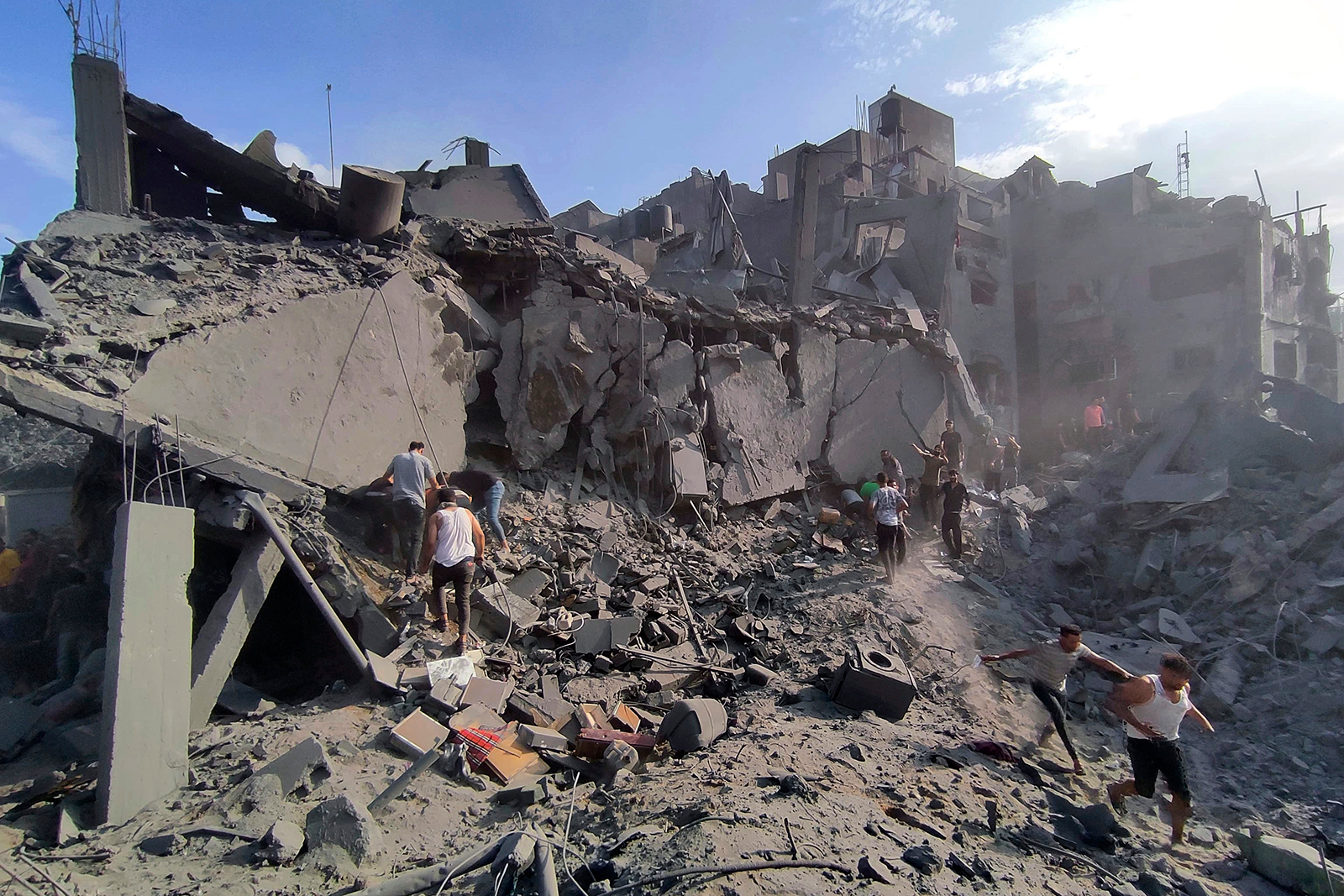
Jabalya refugee camp in northern Gaza, which was hit on Tuesday in an Israeli airstrike targeting a Hamas leader, was always known to journalists covering Gaza for the sheer number of children there.
Over several visits there over the years I found them to be curious and excited when strangers showed up. Crowding around our CNN teams, asking questions, trying their English and jumping in front of the camera. Often my TV producer, driver and fixer would have to keep the children busy and distracted as we attempted to report or record a shot on camera.
Like Gaza’s other refugee camps, these crowded built-up areas have houses, shops, and apartment buildings jammed up against one another, the roads between them in many areas barely wide enough for a car to pass. The open-air markets were always busy.
Even in the best of times though, life was tough in Jabalya. Schools were so crowded classes were held in two shifts a day. The tap water wasn’t fit for human consumption. Unemployment was high and most families were dependent on food aid provided by the United Nations. Yet one rarely got the feeling that people had given up hope.
Once when I was in Jabalya, after another round of fighting between Hamas and Israel in the spring of 2021, we stopped at a shawarma shop the day after the fighting ended. The shop had just opened and was doing a bustling business. Its owner, Amjad, greeted us heartily.
Two years later, in 2023, I was back after another reporting trip, and the shop had expanded. Amjad greeted us like long lost friends and snapped orders to the waiters to get our food.
Above our table was a television running on a loop an advertisement for a local school promising a top-quality education to ensure a shining future for the children of Gaza.
Yes, Jabalya was crowded and noisy and dusty — one of the poorer areas in Gaza — but it was a place where, despite the problems of Gaza, you always came away feeling that someday, somehow, the people there would be able to live a better life.
I can’t go back right now with Israel and Egypt blocking entry into Gaza, but I fear that optimism against all odds may now have been shattered.
Yemen's Houthi rebels target Israel as region on edge for conflict escalation
From CNN's Jessie Yeung, Hamdi Alkhshali and Kyle Blaine
The Israeli military said Tuesday it had thwarted an aerial attack by Iran-backed Houthi rebels in Yemen, as fears rise across the region that the Israel-Hamas war could widen.
Brig. Gen. Yahya Saree, a spokesperson for the Houthi forces, told Houthi-owned Al-Masirah TV that ballistic missiles and drones had been launched against targets in Israel in what he said was the third operation in support of the Palestinian people.
He added that there were plans for more strikes until the “Israeli aggression” ceased.
“Our armed forces launched a large batch of ballistic and winged missiles and a large number of drones at various targets of the Israeli enemy,” he said, referring to all of Israel as “occupied territories.”
The Houthis are a Shia political and military organization in Yemen that have been fighting a civil war in the country against a coalition backed by Saudi Arabia. They have voiced support for the Palestinians and organized protests in Yemen against Israel’s offensive in Gaza.
Earlier on Tuesday, the Israel Defense Forces (IDF) said in a statement that it had used its Arrow aerial defense system for the first time to successfully intercept a surface-to-surface missile that was fired from the area of the Red Sea.
The use of the Arrow defense system, which is designed to intercept high altitude missiles, indicates the Houthis used a more advanced, long-range missile in the attempted attack.
Israeli jets also intercepted what the IDF described as “aerial threats” in the area. The IDF said all threats were intercepted outside of Israeli territory.
The attempted strikes on Israel mark an escalation by the Iran-backed Houthis, with regional rivalries heating up despite the United States scrambling to contain a potential Middle Eastern war.
Gaza hit by another communications blackout, telecoms firms say
From CNN’s Manveena Suri and Abeer Salman
Internet service and communications went down again in Gaza on Wednesday, according to two telecoms companies, as Israel maintains its bombardment and expanded ground operation in the coastal enclave.
Communications have been repeatedly impacted in Gaza, with independent internet monitoring groups telling CNN that recent blackouts have been the worst since the ongoing war between Israel and Hamas began on October 7.
In a statement Wednesday on X, formerly Twitter, Palestine Telecommunications (Paltel) said there was "a complete interruption of all communications and Internet services with the Gaza Strip, due to international routes that were previously reconnected being cut off again."
The Jawwal Telecommunication Company also said its cellphone service was down, according to a statement on Facebook.
Calls and messages from CNN staff in Jerusalem to contacts with Gaza numbers on Wednesday did not connect.